A day off needs a replacement, not just approval
In most workplaces absence means work waits. In a school it means thirty students need a supervised room, so approval and cover are one decision rather than two steps.

UAE Labour Law entitlements, academic-calendar awareness, and HOD → VP → Principal approvals — with balances every staff member can check from their own phone.
Included from Starter · Multi-level chains on Growth · UAE Labour Law-aware
An office can absorb an absence; a classroom cannot. School leave decisions depend on things generic HR tools never see — exam weeks, term boundaries, who else in the department is already off, and whether cover exists. CampusTrack puts that context in front of the approver: requests carry live balances calculated against UAE Labour Law entitlements, the team calendar shows clashes before anyone says yes, and the chain routes through the people who actually decide in a school — the head of department, the vice principal, and, when needed, the principal.
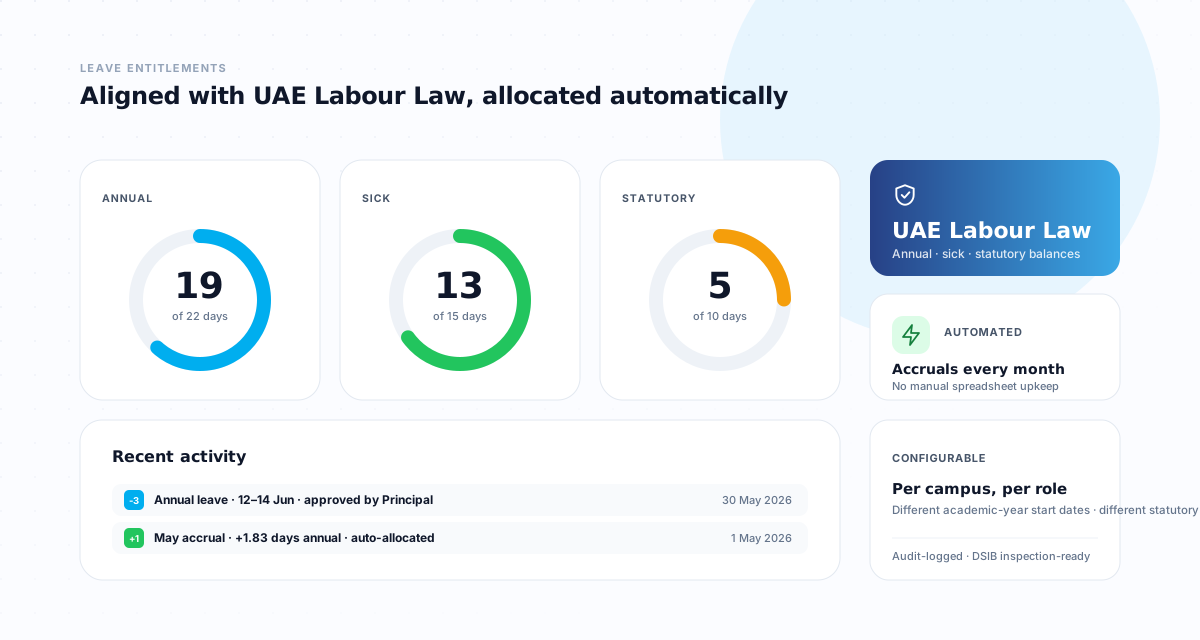
Illustrative interface — entitlements and balances calculated against UAE Labour Law, with the team calendar beside every request.
Annual, sick, and statutory leave types with accruals and balances calculated per UAE Labour Law — not a generic policy engine you have to rebuild.
Terms, exam weeks, and school events sit behind every request, so approvers see a clash with the school year before approving.
Basic one-level approval from the free Starter plan; full HOD → VP → Principal chains per campus and staff group on Growth.
Staff request leave with their live balance in view; approvers act from the mobile app with push notifications. No paper forms, no email chains.
Every request shows who else in the department is already off that week — the clash is visible at decision time, not discovered on the day.
Every approval, rejection, and balance change is timestamped and auditable — the record HR, finance, and inspectors can all trust.
Leave policy looks portable between industries and is not. The academic calendar changes what a day off costs and when it can be taken.
In most workplaces absence means work waits. In a school it means thirty students need a supervised room, so approval and cover are one decision rather than two steps.
Most discretionary leave is expected in holidays, which compresses requests into narrow windows and makes term-time requests exceptional by definition. A generic accrual system has no concept of this.
Statutory entitlement runs on a calendar or anniversary basis; schools operate on an academic year. Reconciling the two is where most manual spreadsheet work actually goes.
A teacher on three days accrues proportionally, and the arithmetic gets worse when their pattern changes mid-year. This is the single most common source of leave-balance disputes.
Training days, exam invigilation off-site, and school trips are absence from the timetable without being leave. Categorising them as leave distorts both the balance and the attendance record.
A teacher moving to another school within the group keeps their accrual. Recreating them at the new site resets a balance they earned, and they will notice.
A 20-minute walkthrough with your leave types, your chains, and your academic calendar. Free up to 50 staff.