The form is not the point
Schools frequently have a good observation form and no way to read across the observations. Twenty completed forms in a shared drive answer questions about twenty lessons and nothing about the school.
Run observation workflows with evidence capture, connect them to review cycles and improvement plans, and give leadership band-level visibility across every campus — in the same platform that already runs your staff attendance and HRMS.
Full HRMS (Custom) plan · Multi-campus · Configurable frameworks · AI-assisted, leader-decided
Most schools run observations on paper forms and performance reviews in spreadsheets — so the two never meet, and leadership sees neither until inspection season. CampusTrack connects them: an observation is scheduled, conducted against your chosen framework, rated on a configurable band scale, and signed off with evidence attached. Those records flow into the teacher's performance cycle — goals, self-rating, manager rating, calibration — and into improvement or probation plans when they're needed. Leaders see band distribution and coverage per campus all year, not the week before an inspection.
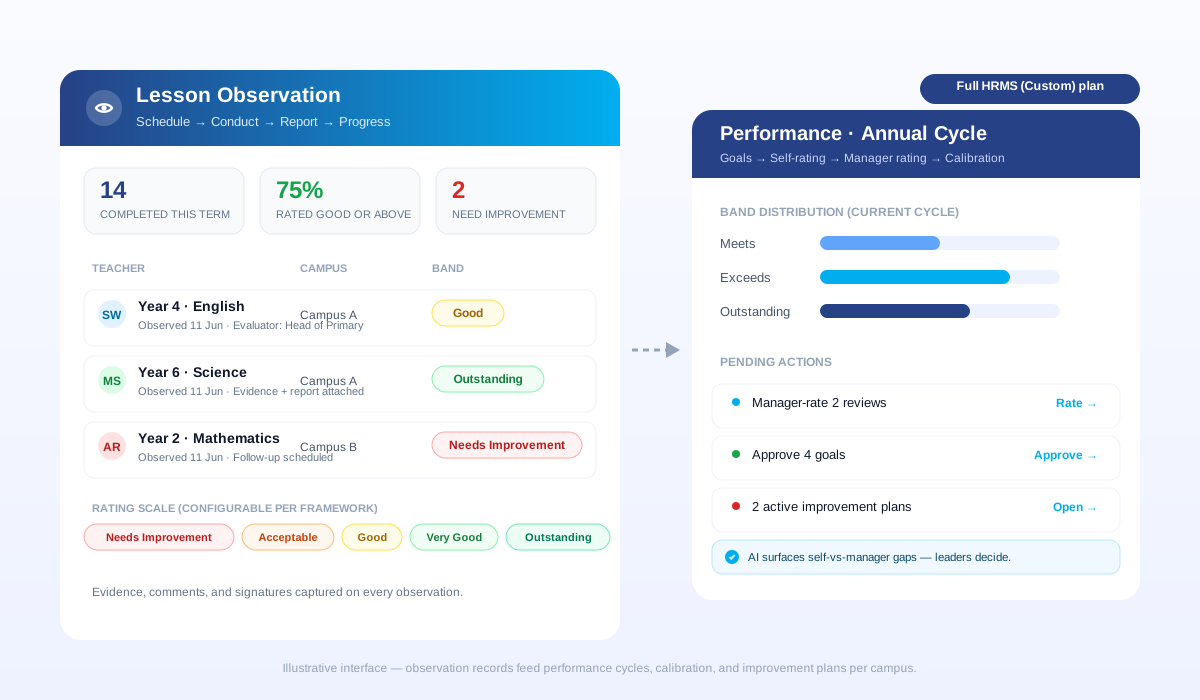
Illustrative interface — observation records with configurable rating bands feed review cycles, calibration, and improvement plans per campus.
Schedule → conduct → report → progress. Observers work from a structured form on any device; evidence, comments, and signatures are captured on the record.
Use the built-in band scales (4, 5, or 6 bands) or define your own to match your school’s framework. Scales apply consistently across observers and campuses.
Annual or termly cycles with goals, self-rating, manager rating, and finalisation. Every step is tracked, and pending actions surface to the right person.
Calibrate ratings across departments, run probation reviews on their own band scale, and manage improvement plans with clear actions and follow-ups.
Band distribution, observation coverage, and teachers needing support — per campus and across the group, all year round.
AI surfaces evaluator drift, self-vs-manager rating gaps, and staff trending toward the lowest band. Every consequential decision stays with a person.
Most schools already run observations. The value is lost somewhere between the observation happening and anyone being able to act on it.
Schools frequently have a good observation form and no way to read across the observations. Twenty completed forms in a shared drive answer questions about twenty lessons and nothing about the school.
A single observation is a snapshot and a weak basis for any conversation. What makes it useful is the previous three alongside it, showing whether an agreed focus actually changed anything.
An observation that agrees a development focus and never revisits it is an administrative exercise. Recording the follow-up as part of the cycle is what separates development from paperwork.
A theme recurring across a department is a curriculum or workload signal rather than an individual one. That only becomes visible when observations aggregate, which is precisely what a folder of documents prevents.
Developmental observation and performance management are different activities with different tones. Systems that merge them make staff defensive in both, and the developmental one is the casualty.
When a school is asked to show how teaching quality is monitored and developed, a maintained record answers immediately. Reconstructing one from documents is slower and visibly reconstructed.
A 20-minute walkthrough with your rating bands and review cycle — and an honest answer on whether Full HRMS fits.