
A New Teacher’s First Term, on Paper: Induction, Observation and Probation
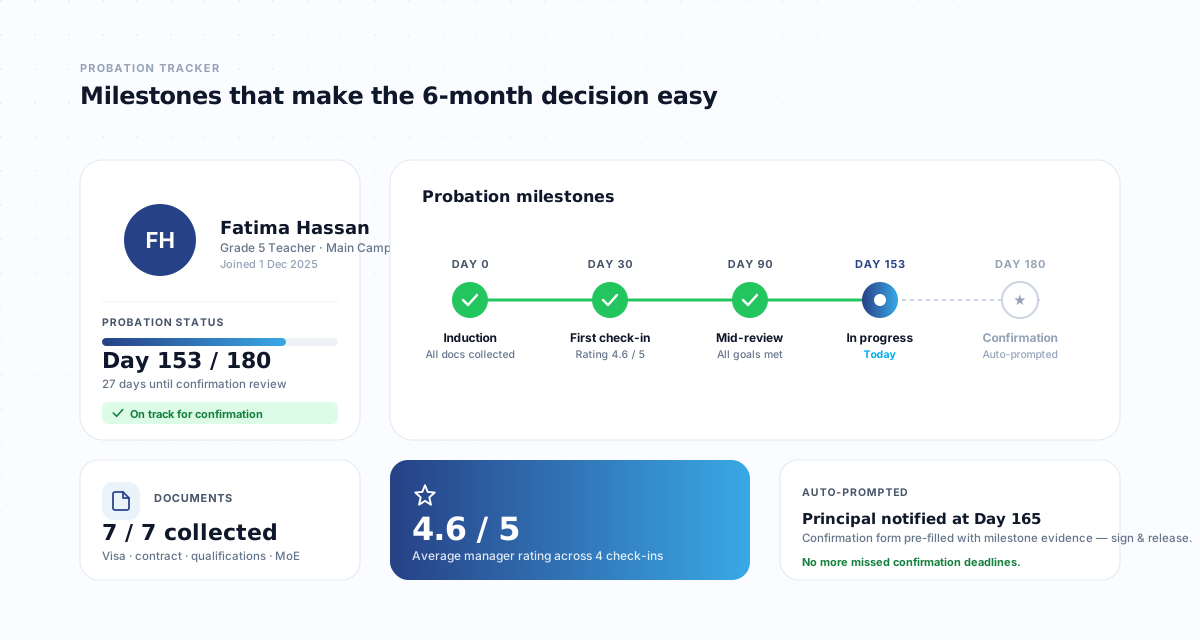
A confirmation decision is usually made in a ten-minute conversation between a principal and a head of department, some months after the evidence that should inform it stopped being available. Everyone involved is acting in good faith. The problem is that the record was never built as the term went along, so the conversation runs on memory, and memory is weighted heavily towards whatever happened in the last three weeks.
This is a description of what the record should hold at three points, and why the middle one is where schools lose it.
Day one: the things that expire
The first day is administratively dense and it is the only day everyone is paying attention, which makes it the cheapest time to capture things that become expensive later. Most of it is document work:
- Identity and right-to-work documents, each with its own expiry date — and the expiry recorded as a date the system can act on, not as a scan filed in a folder.
- Qualification evidence, including the originals a new school will eventually ask for.
- Safeguarding and policy acknowledgements, with the version acknowledged, not just the fact of it.
- Contract terms that later drive leave accrual and end-of-service arithmetic.
None of that is interesting and all of it is load-bearing. The failure mode is not that a school skips it; it is that the school collects it and stores it somewhere that cannot tell anyone when it is about to lapse. Structured staff onboarding is worth setting up once precisely because the cost of not having it shows up eighteen months later, quietly, as an expired document nobody was told about.
Week six: the observation that actually helps
The first formal observation is the single most useful artefact in the whole period, and the one most often left too late. Observe in week two and you are watching someone who does not yet know the students’ names. Observe in week eleven and whatever you find has already had a term to become habit.
Three things make an observation useful rather than ceremonial:
- The date was known in advance. A surprise observation measures how someone handles a surprise.
- What was agreed afterwards is written down, in the observer’s words and the teacher’s, with a date to revisit it. An observation with no follow-up is a grade, not development.
- It links forward. The second observation should be able to open the first one beside it. Without that the cycle is a series of unconnected snapshots, which is exactly what makes a confirmation conversation feel like guesswork.
This is the part that reconstruction cannot fake. A form completed in the week the decision is due reads as one written in the week the decision was due — to the teacher, to a moderator, and to anyone reviewing the process later. Lesson observation and performance works because the cycle is continuous, not because the form is good.
The signals that are about conditions, not competence
Alongside the deliberate record there is an incidental one, and it is often the more honest of the two. Over a first term a school can see, without asking anyone:
- How much cover this person picked up, and how that compares with their department.
- Whether their entitlement is going unused while colleagues take theirs.
- Whether attendance corrections cluster around particular days or duties.
- Whether their timetable ended up heavier than the one they were recruited to.
These describe the conditions someone is working under. Read as performance evidence they punish a person for a situation the school created — which is a fast way to lose a teacher you were about to confirm. Held separately, as staff wellbeing signals, they answer a different and more useful question: is this job, as actually configured, survivable for the person doing it?
The end of probation: one question
The test for whether the record is adequate is simple. Could someone who was not present read it and reach the conclusion you reached? Not agree with it as a matter of taste — reach it, from what is there.
If the answer is yes, the confirmation conversation takes ten minutes and is uncontroversial. If it is no, the decision may still be right, but it is now a judgement the school cannot show its working for — and that is the version that becomes difficult if the person disagrees with it.
Where this usually goes wrong
Almost never at the start. Schools induct well; the first week is generally handled with care. The gap is weeks three to twelve, where nothing is scheduled, nobody owns the record, and the next prompt anyone receives is the confirmation deadline itself.
The fix is unglamorous: put the observation dates in when the contract is signed, let the document expiries generate their own reminders, and keep the workload signals visible to someone whose job is to notice them. All three are things a system should do without being asked, because a term is exactly long enough for a person to forget.
Frequently asked questions
When should a new teacher be observed for the first time?
Early enough that the feedback can still change the term, and late enough that they have found the room. Most schools land between weeks four and six. What matters more than the week is that the date was known in advance rather than arriving as a surprise.
What should be on the record at the end of a probation period?
Enough for someone who was not there to reach the same conclusion you did. That means the induction items actually completed, at least one observation with what was agreed afterwards, and the attendance and workload pattern over the period — not a paragraph of impressions written the week the decision is due.
Is a wellbeing signal the same as a performance signal?
No, and conflating them is how schools lose good staff. Cover load, unclaimed leave and a rising correction count describe the conditions someone is working under. Read as performance evidence they punish the person for the situation.